
A Proposed Ministry of Blessed Land Ministries
Pleasanton Community Garden
Faith that feeds. A vision to grow fresh food and hope for low-income seniors in our community.
Exploration Stage: Inviting Partners
Our Foundation
"Suppose a brother or a sister is without clothes and daily food. If one of you says to them, 'Go in peace; keep warm and well fed,' but does nothing about their physical needs, what good is it? In the same way, faith by itself, if it is not accompanied by action, is dead."
James 2:15-17
The Vision
Caring for physical needs, together
Prayer and reflection have always been the heart of the Atascosa Center. We believe that same faith calls us to act. Many seniors in Pleasanton live on fixed incomes and struggle to put fresh, healthy food on the table. A community garden would let neighbors grow produce together and share the harvest with those who need it most.
Grow Food
Raised beds and shared plots where volunteers grow fresh vegetables and fruit for local seniors facing food insecurity.
Serve Seniors
A simple, dignified way to care for the physical needs of low-income seniors in Pleasanton, as Scripture calls us to do.
Build Community
A place where churches, families, and neighbors work side by side, turning faith into action under the South Texas sun.
The Land
An honest look at the property
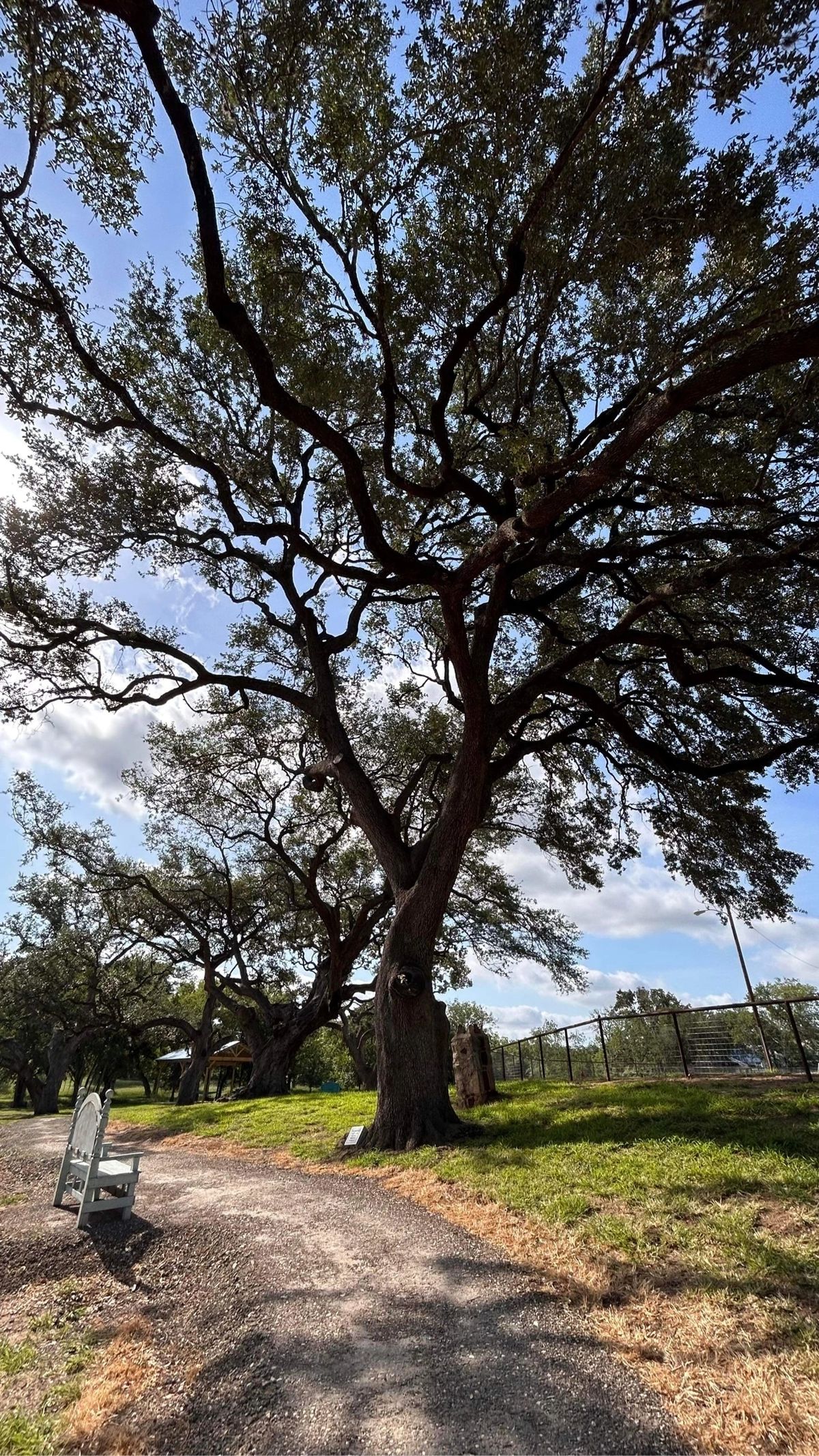
The Atascosa Center sits on part of a larger surveyed tract that also includes the landowner's privately fenced home, which is not part of the ministry property. Within the ministry area, a portion of land is currently unused because it lies within a mapped 100-year floodplain, meaning land with a 1 percent chance of flooding in any given year. That unused area is what we are considering for the proposed garden. The prayer walk and its ancient oaks would remain exactly as they are.
A quick word on what "100-year floodplain" really means, because the name is misleading. It does not mean flooding happens only once a century. It means there is a 1 percent chance of a major flood every single year. The owner tells us no flooding has been observed on the property in roughly 30 years, and we are still confirming the right way to describe that history, but even a long dry stretch does not remove the risk.
There is also a water drainage easement running along one edge of that unused area, and it physically separates the existing prayer and reflection park from the area being considered for the garden. An easement is its own kind of restriction, separate from the floodplain itself, and we would treat it as a protected corridor. Nothing would go inside the easement area: no garden beds, raised beds, storage, fencing, irrigation lines, fill, or portable structures, and no bridges, paths, crossings, or landscaping either, unless the easement documents and the drainage authority expressly allow it. The garden concept would focus only on suitable land beyond the easement.
Conceptual Site Organization
Existing Prayer Park
The walk and its ancient oaks, unchanged
Drainage Easement
Protected corridor separating the park from the garden area
Proposed Garden
Remaining suitable land beyond the easement
This diagram is conceptual only and is not a survey. It reflects the owner's general markings on a recent survey, which are not verified legal boundaries, and it excludes the landowner's privately fenced residence. The exact footprint and usable area beyond the easement cannot be known until a professional survey and floodplain review are complete.
Because the land is in a floodplain, no permanent buildings or permanent structures would be placed there. Portable features may be possible, but nothing is assumed: the site layout, any portable structures, raised beds, fencing, storage, and irrigation would all need to be assessed against local floodplain rules, permit requirements, flood safety, and flood-resistant maintenance. We also want to be straightforward about the risks. Crops and movable elements could be damaged or contaminated after a flood, and no produce that has come into contact with floodwater would ever be harvested or shared.
For all of these reasons, we are not claiming the garden can be installed yet. The first step of this proposal is confirming site suitability and floodplain approval with the appropriate county and city floodplain administrator. Only after that confirmation would we talk about a launch timeline or fundraising.
Where We Are
An invitation, not an announcement
This garden is a proposal in its earliest stage. Nothing is finalized, and no partnerships have been agreed to yet. We are prayerfully inviting discussion with local organizations who share a heart for Pleasanton, including First Methodist Church of Pleasanton and Bountiful Blessings Food Pantry. These are invitations to talk and dream together, not confirmed commitments.
If your church, organization, or family would like to be part of the conversation, we would love to hear from you. Ideas, land, tools, seeds, and willing hands are all welcome at this table.
How You Can Help
Every seed starts small
Pray
Ask God whether this garden should grow, and pray for the seniors it would serve.
Share your thoughts
Pastor, gardener, neighbor, or senior yourself: your perspective will shape whether and how this vision moves forward.
Offer resources
Land, water access, tools, seeds, or expertise could all help a future garden take root.
Spread the word
Tell a friend or a church in Pleasanton. The right partners may be one conversation away.